
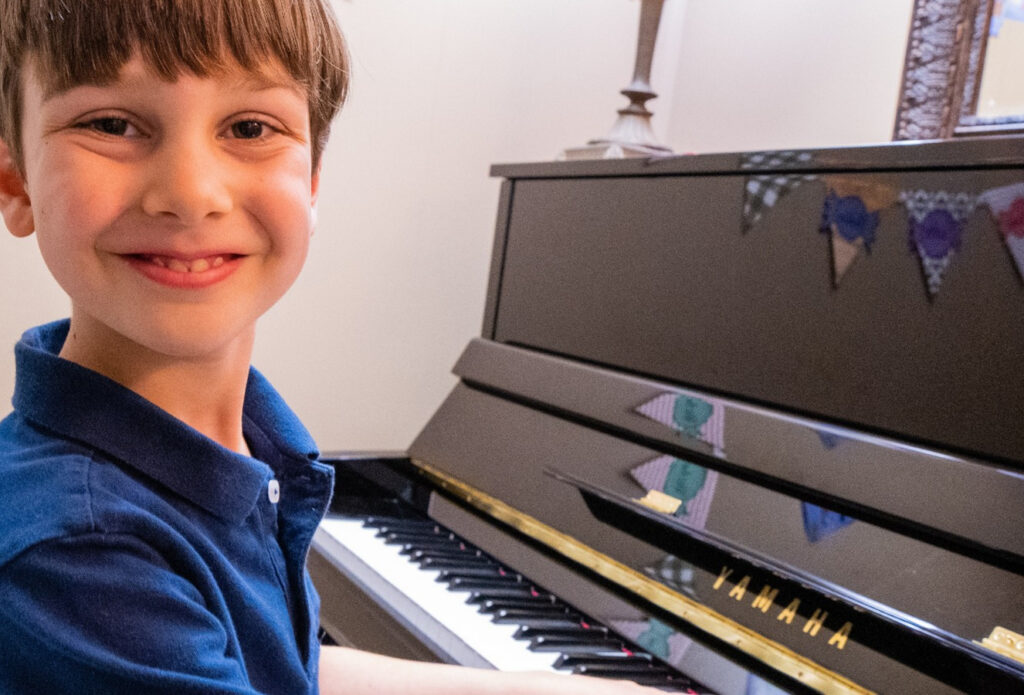
One of the questions we get a lot here at PCS is: “When is the right time to begin piano lessons?”
For many children, around age six is a wonderful time to begin formal piano instruction. At this stage, many children are developing the attention, coordination, and learning skills that help them enjoy the process of learning an instrument.
But the best starting point is not only about a child’s age. Readiness, personality, confidence, and learning style all play an important role.
At Piano Central Studios, we believe the goal is not to rush children into lessons before they are ready. It is to meet each child where they are and provide the right experience for their stage of growth.
Some children begin their musical journey much earlier through Kindermusik, where they explore music through singing, movement, rhythm, and play. Others begin formal piano instruction in group programs like Piano Express or in private lessons when they are ready for a more structured experience. Group lessons are often an ideal place to start, particularly for younger beginners.
The right beginning is the one that helps budding musicians feel successful, supported, and excited about music!
The Best Age to Start Piano Lessons Varies
The best age to start piano lessons is often around age six because many children are ready for the type of learning involved in formal music instruction. Start too young in formal music lessons, and you risk frustration and burnout. Starting around age six or seven is ideal, but there’s no age limit, whether it’s age 6, 16, 60, or 86!
By age 6, children are often beginning to develop several critical skills that support piano learning:
- Listening carefully and following directions
- Recognizing patterns
- Building hand coordination
- Distinguishing between the right and left hands
- Beginning to work independently
- Staying focused on a task for short periods
- Learning to read and write
Learning piano involves much more than learning which keys to press. Students develop rhythm, musical understanding, listening skills, and problem-solving abilities as they learn to create music.
That said, children do not need to already know how to read music or demonstrate unusual musical ability before beginning. Beginner lessons are designed to help children build these skills over time.
How Do I Know If My Child Is Ready for Piano Lessons?
Parents often wonder if their child needs to be especially talented or naturally musical before starting lessons.
They do not. It’s important to remember that children learn music the same way they learn many other skills: through encouragement, practice, guidance, and time.
So, instead of looking for talent, look for signs that your child is ready to begin learning, like:
They Show a Genuine Interest in Music
Interest is one of the most important starting points.
They may ask about learning piano, enjoy singing along with songs, create their own rhythms, or spend time exploring sounds. They may be drawn to instruments or enjoy watching others make music.
Interest does not always look like a child saying, “I want piano lessons.” Sometimes it appears through curiosity and a desire to participate. Sometimes it sounds like humming all the time or dancing around the house.
A child who enjoys music is more likely to approach lessons with openness and excitement!
They Can Participate in a Structured Activity
Piano lessons involve routines.
Students learn by listening to their teacher, trying new skills, repeating activities, and gradually building independence.
A child does not need to sit perfectly still or have a long attention span. They simply need to be able to participate in a structured experience with support.
Many children develop these skills naturally through school, activities, and family routines.
They Are Able to Work through Small Challenges
Learning an instrument requires patience. And that can sometimes feel challenging.
A new song may not sound perfect right away. A rhythm may take several tries. A new skill may need repetition before it feels comfortable.
A child who can try again, accept encouragement, and celebrate small improvements is building important habits for music learning.
The goal is not avoiding challenges, but rather, learning that challenges can be overcome.
They Recognize Letters, Numbers, and Patterns
Music includes patterns, symbols, and sequences, just like reading and math.
Children benefit from beginning to recognize letters, numbers, and repeated patterns because these skills help them connect what they see with what they hear and play.
However, children do not need advanced reading skills before beginning piano lessons. A supportive teacher introduces concepts step by step, and support at home reinforces those concepts with practicing and working through the weekly assignments!
They Can Practice with Support at Home
Young beginners usually need help building practice habits, but students of all ages will need reminders and encouragement to practice consistently.
Parents do not need to re-teach the lesson at home. Their role at home is to look over the weekly assignments, encourage consistency, ask about what their child is learning, and celebrate progress.
A few minutes of focused effort and encouragement each day can help children develop confidence and ownership over time so that they are motivated and able to practice on their own.
Can Young Children Begin Music Before Piano Lessons?
Yes! So many of our students began their musical journey before formal instrument lessons.
Young children learn through experiences that match their developmental stage. Singing, movement, repetition, exploration, and play are natural ways for young children to understand music.
At Piano Central Studios, children from newborn through age seven gain a wonderful introduction and foundation in music, movement, and instruments in Kindermusik.
Kindermusik is an early childhood music and movement curriculum that allows young children to build essential musical foundations through singing, movement, rhythm, instrument exploration, play, and age-appropriate activities.
Children can explore instruments, feel the steady beat, sing, listen, and experience the sweet connection that comes from making music with others.
Children as young as newborns can be enrolled in Kindermusik classes, and the program moves level by level from Foundations to Musicians, when children graduate from Kindermusik into Music Lessons. At PCS, that’s a beautiful, seamless experience.
For families with littles from newborn to age 7, Kindermusik provides a meaningful first step toward a lifelong relationship with music. At Piano Central Studios, it’s our mission to nourish hearts and minds with music making for life!
Early Music Classes Build Piano Readiness
Early music experiences help children develop skills that support future music learning and instill a lifelong love of music.
In Kindermusik, children practice listening, rhythm, steady beat, movement, and musical expression through playful activities. It’s an enriching experience that touches little minds, hearts, and bodies, enhancing every area of development: social-emotional, physical, cognitive, language and literacy, and of course, musical.
These early childhood experiences in Kindermusik class help children become familiar with important musical concepts and expression before they ever sit down for a traditional lesson.
For example, a child who learns to match a rhythm with an instrument is beginning to understand timing. A child who listens and moves during a scarf play activity is learning creativity and self-expression.
A child who sings and listens carefully is developing musical awareness. A child who participates in a classroom routine is learning how to engage in a group learning environment.
Early music classes also help children build confidence from a very young age. They learn that music is something they can participate in, explore, and enjoy. Music becomes a part of their hearts and a part of who they are.
This foundation can make the transition into piano lessons feel more comfortable because children already understand that music learning is a positive experience.
Are Group or Private Piano Lessons Better for Beginners?
There is no single best format for every student.
However, most beginning students thrive in a group environment where they can learn alongside peers. Others benefit from private instruction that moves at a pace designed specifically for them.
The best choice for music lessons depends on your child’s personality, learning style, and goals, but here at PCS, we always encourage families to at least consider group lessons first.
Benefits of Group Piano Lessons
Group piano lessons can be a wonderful starting point for many young beginners.
Children often enjoy being part of a group because they see other students learning, practicing, and making progress. This creates a sense of belonging and encouragement.
At Piano Central Studios, Piano Express is designed for many beginning piano students. The program combines piano instruction with technology, games, musicianship activities, and teacher guidance.
The experience helps students develop musical skills while also building confidence and motivation.
For children who enjoy learning with others, group piano lessons can provide a strong and encouraging introduction.
When Private Lessons May Be a Better Fit
Private piano lessons may be a better option for students who need more individualized attention or have specific goals.
At PCS, private piano instruction is available for students beginning at age six and continuing through adulthood. Lessons are customized around each student’s abilities, interests, and musical goals.
Some students begin in a group setting and later transition into private lessons as their needs change.
The important thing is finding an environment where our students feel supported and motivated!
Is It Too Late If My Child Is Older?
Never!
Many students begin music lessons as older children, teenagers, or adults. Starting later does not mean missing an opportunity.
Older beginners often bring strengths that support learning, including greater independence, stronger reading skills, and clearer personal interests.
Some students begin because they have always wanted to learn. Others return to music after years away.
At Piano Central Studios, students of all ages and experience levels can continue growing through music.
Music is a skill that can be enjoyed throughout life, and every student deserves the opportunity to begin at a time that feels right.
How Parents Can Help a Young Beginner Succeed
Parents play an important role in creating a positive music experience.
The most helpful support is often simple:
Create a consistent routine.
A predictable time for music helps children build habits and understand that progress happens through regular effort.
Encourage effort, not perfection.
Children need to know that mistakes are part of learning. Celebrate their willingness to try.
Provide the right instrument at home.
Having access to an appropriate piano or keyboard supports learning between lessons. PCS can help families understand what instrument options may work best before purchasing.
Stay connected with the teacher.
A strong partnership between parents and teachers helps children feel supported throughout their musical journey.
Choosing the Right Starting Point at Piano Central Studios
Every child begins their musical journey differently!
For Babies, toddlers, and preschoolers, Kindermusik provides early childhood music experiences where children explore music through movement, singing, rhythm, and play.
Beginning piano students love Piano Express because it offers a group piano pathway that helps many young beginners develop skills and confidence.
Students who need individualized instruction benefit from our Private piano lessons that provide personalized guidance based on each student’s needs.
Choosing where to begin does not have to feel overwhelming. The PCS team can help you find the experience where your child will feel comfortable, encouraged, and excited to learn!
Frequently Asked Questions About Starting Piano Lessons
What is the youngest age a child can start piano lessons?
Formal piano instruction at PCS begins at age six. Younger children can begin developing musical foundations through Kindermusik, which offers age-appropriate classes for children from newborn through age seven.
Does my child need to know how to read before starting piano?
No. Children do not need to know how to read music before beginning lessons. Teachers introduce musical concepts gradually and support each student’s development.
How long should a beginner practice?
Practice needs vary depending on the student and program. The most important goal is developing consistent habits and a positive relationship with practice. At PCS, we support practice in a variety of ways, from using the Practice Space app to our Milestones Awards Program.
Are group piano lessons effective?
Yes. Group piano lessons can be a great fit for many beginners because students receive instruction while learning alongside peers.
Can my child switch from group to private lessons?
Yes. Students’ needs can change as they grow. PCS can help families determine the right next step as students continue developing!
Start Your Child’s Piano Journey at Piano Central Studios
The best age to start piano lessons is only one part of the decision. The most important thing is choosing a musical experience that matches your child’s readiness and helps them feel successful.
Whether they begin with Kindermusik, Piano Express, or private piano lessons, Piano Central Studios is here to help your family find the right path. They’ve helped thousands of families and students since the school was founded back in 1979.
Not sure which program fits? Piano Central Studios can help you choose a starting point! Explore piano lessons at PCS and find the right next step for your child!
And if piano isn’t their thing, check out all of the other lessons PCS offers too, like voice, violin, viola, guitar, ukulele, flute, and French horn!