
“Is my child old enough for Kindermusik?”
It’s a question we often hear from parents, especially when their child is just a baby or toddler.
When many of us hear the words “music lessons,” we picture a child sitting at a piano, following directions from a teacher, learning notes, and practicing at home. That can be part of a child’s musical journey later on. But early childhood music looks quite different.
A baby doesn’t need to sit at an instrument and play a song to be learning about music. A toddler doesn’t need to follow every direction or participate in every activity. And a preschooler doesn’t need to demonstrate a particular level of musical ability before joining a class.
Kindermusik classes at Piano Central Studios are designed around where young children are developmentally. It’s about their developmental stage and their chronological age. Children learn through singing, movement, listening, repetition, instruments, play, and interaction with the grownups and children around them.
So when you’re wondering, “Is my child old enough for Kindermusik” it can help to look for musical responses rather than to expect formal lesson skills!
Musical Readiness Is Different From Lesson Readiness
A child can be ready to experience and learn through music long before they’re ready for traditional private instruction.
You might already be seeing signs of musical readiness in your child without realizing it!
Musical experience can look like:
- Watching other children before joining in
- Repeating sounds or little pieces of songs
- Anticipating a familiar part of a song
- Showing interest in shaking, tapping, or exploring instruments
- Pausing when the music changes
- Joining in with a favorite motion even when they ignore everything else
These are all meaningful musical responses.
A young child’s participation may be small, inconsistent, or easy to miss. But those little moments are part of how children become familiar with sound, rhythm, patterns, movement, and musical routines.
At PCS, our Kindermusik classes are intentionally designed around these stages of development, with age-specific experiences that grow along with your child!
Babies Are Already Learning Through Music
Babies don’t need to “do” very much for a musical experience to be meaningful.
Think about what happens when you sing the same lullaby before bedtime each night. Your baby hears your voice, watches your face, experiences the rhythm of the song, and begins to recognize what comes next.
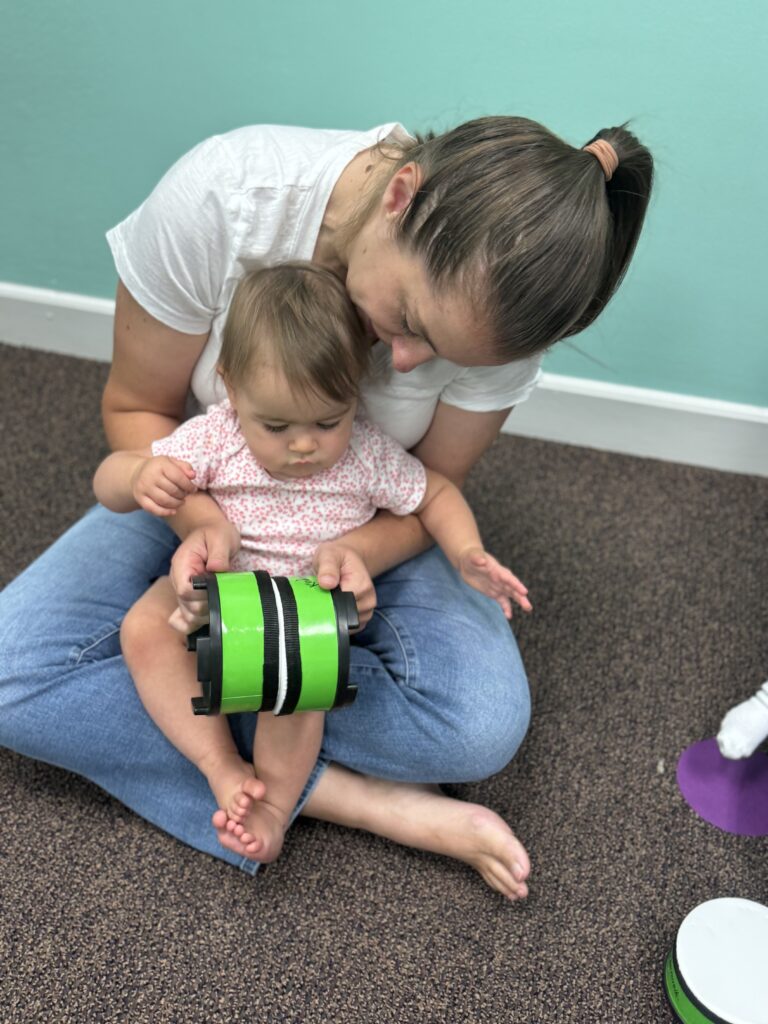
In Kindermusik Foundations, babies experience music through singing, movement, intentional touch, sensory play, and warm interaction with their caregivers. Parents will gently bounce their baby to a song, sway together, explore an instrument, and share plenty of smiles and sounds.
Over time, you may notice your baby reacting differently to familiar and unfamiliar songs. They might pause when a rhythm changes, reach toward an instrument, or begin moving when they recognize a favorite song.
The repetition matters. But so does the relationship.
Music gives parents and babies a natural way to listen, move, vocalize, and share attention together. Those simple interactions are a big part of what makes early childhood music so special.
What Musical Readiness Looks Like in Toddlers
If you have a toddler, you probably already know that “participation” can mean many different things.
One week, participation for your little one could look like happily shaking every instrument in the room. The next week, they’ll spend half the class watching from your lap.
That’s normal for this age.
Toddlers are learning through movement, repetition, experimentation, and observation. They’re also developing a growing awareness of musical patterns and routines.
In our Kindermusik classes (and at home), you’ll see them:
- Copy a clapping pattern
- Tap an instrument along with a song
- Repeat a movement from class later in the day
- Want to hear the same song again and again
- Sing a tiny fragment of a song at home
- Experiment with how different instruments sound
Sometimes the most encouraging sign happens after class rather than during it.
Children, especially toddlers, need time to watch, listen, and become comfortable before they join an activity. That’s why we have predictable routines and lots of joyful repetition in our Kindermusik classes.
What About Preschoolers and Big Kids?
As children grow, their participation becomes more intentional.
A preschooler will begin to follow simple musical patterns, remember favorite songs, sing or chant independently, match movements to music, or become curious about how different instruments work.
This is also a time when children can begin to explore more musical ideas. They’ll notice that two sounds are different or recognize a repeated rhythm.
At PCS, the Kindermusik levels grow with children through these stages. Older preschoolers experience more opportunities for instrument exploration, musical concepts, singing, movement, notation, and pre-instrument preparation.
For example, Level 4 introduces keyboard activities alongside musical games, instrument exploration, ensemble play, and other hands-on experiences. Musicians, for ages 5 and 6, builds an even stronger foundation in musical concepts, vocabulary, notation, singing, movement, listening, and playing instruments such as the glockenspiel and ukulele.
The goal isn’t to rush a preschooler into formal lessons. It’s to give them an age-appropriate musical experience that allows their understanding and confidence to grow.
Your Child Doesn’t Have to “Perform” to Be Learning
This is one of the most important things for a parent to know before beginning Kindermusik.
Your child might watch from your lap for most of class. They might wander around the room. They might participate enthusiastically in one activity and completely ignore the next. They might be comfortable one week and unusually shy the next.
And sometimes, they may seem to do very little in class, only to recreate the entire activity at home later.
None of those moments mean your child isn’t learning.
Young children need time to observe before they participate. Watching another child play an instrument gives them information. Hearing the same song repeatedly gives them familiarity. Seeing a teacher demonstrate an activity gives them a chance to decide when they’re ready to try it.
You don’t have to spend the whole class asking, “Are you going to sing?” or “Can you do it like the teacher?”
Your own participation can be much more helpful. Sing along. Move with the music. Explore the instruments. Enjoy the activity together.
Your child can watch you and still be part of the experience.
So, What Is the Right Age to Start Kindermusik?
We believe that children benefit from music even before they are born. And our Foundations classes at PCS mean that you can bring your child to class as a newborn.
Kindermusik is designed around developmental stages, beginning with Foundations for babies and continuing through age-specific levels for toddlers and preschoolers. The earlier start, the better, but your child can join the Kindermusik journey at any time, starting with the level that fits their age and developmental stage.
That means you don’t have to wait until your child can sit quietly, follow every instruction, sing on command, or show an obvious interest in playing an instrument.
Those are different questions from whether your child is ready to experience music.
If your baby turns toward a song, your toddler bounces when the music starts, or your preschooler or big kid remembers a song and wants to sing it again, you’re already seeing the beginnings of musical engagement.
And if your child needs some time to watch before joining in, that’s okay, too.
At Piano Central Studios, we want early music experiences to feel welcoming, meaningful, and joyful for both children and their grownups. We’ll help you find the Kindermusik level that fits your child and give you a place to make music together.
Ready to find the right Kindermusik class for your child? Explore our Kindermusik classes at Piano Central Studios.